Trace elements and rare earth elements in post-mining pit lakes of the Muskau Arch (Poland): AMD-related enrichment and toxicity assessment
DOI:
https://doi.org/10.7494/geol.2025.51.4.389Keywords:
acid pit lake, lignite pit lake, acid mine drainage, LREE enrichment, meromictic pit lake, neutralized pit lakesAbstract
This study presents results for trace elements (TEs) and rare earth elements (REEs) in five pit lakes located within the Muskau Arch, one of the largest regions in Central and Eastern Europe affected by acid mine drainage (AMD). Concentrations of TEs (Ag, Al, As, Ba, Be, Bi, Cd, Co, Cr, Cu, Fe, Li, Mn, Mo, Ni, Pb, Rb, Sb, Sc, Se, Th, Tl, U, V, Zn) and REEs (La, Ce, Pr, Nd, Sm, Eu, Gd, Tb, Dy, Ho, Er, Tm, Yb, Lu) were determined using inductively coupled plasma triple quadrupole mass spectrometry (ICP-QQQ-MS). The highest concentrations were recorded for Fe (0.14–156.9 mg/L), which was the dominant TE in all pit lakes except MA1, where Al was dominant. PCA indicated that TEs such as Al, Be, Co, Fe, Li, Mn, Ni, Rb, Sc, Th, and Zn were strongly associated with pit lakes affected by AMD. Two subgroups were identified: (1) Be, Co, Ni, and Zn, which correlated with Al and low pH, and (2) Fe, Mn, Li, Rb, and Th, which correlated with slightly higher pH and anoxic and more reducing conditions. The toxicity analysis of TEs revealed substantial variation among the pit lakes (from extreme to low toxicity) and indicated that the most important TEs contributing to water toxicity were Al, Mn, Zn, and Ba. Total REE concentrations ranged from 0.15 μg/L to 149.3 μg/L, with by far the highest values recorded in MA2, and their concentrations were strongly influenced by pH. The pit lakes generally exhibited LREE (including La to Eu) enrichment, as well as a weaker MREE (including Sm to Dy) enrichment. Positive Gd anomalies were identified at all sampling points. Additionally, positive Eu anomalies were observed in all pit lakes except MA2, which was the most strongly affected by AMD, and positive Tb anomalies were recorded primarily in samples influenced by AMD.
Downloads
References
Adeniyi A.G., Emenike E.C., Iwuozor K.O., Okoro H.K. & Ige O.O., 2022. Acid mine drainage: The footprint of the Nigeria mining industry. Chemistry Africa, 5(6), 1907–1920. https://doi.org/10.1007/s42250-022-00493-3.
Akcil A. & Koldas S., 2006. Acid mine drainage (AMD): Causes, treatment and case studies. Journal of Cleaner Production, 14(12–13), 1139–1145. https://doi.org/10.1016/j.jclepro.2004.09.006.
Aral H. & Vecchio-Sadus A., 2008. Toxicity of lithium to humans and the environment – A literature review. Ecotoxicology and Environmental Safety, 70(3), 349–356. https://doi.org/10.1016/j.ecoenv.2008.02.026.
Atangana E. & Oberholster P.J., 2021. Using heavy metal pollution indices to assess water quality of surface and groundwater on catchment levels in South Africa. Journal of African Earth Sciences, 182, 104254. https://doi.org/10.1016/j.jafrearsci.2021.104254.
ATSDR (Agency for Toxic Substances and Disease Registry), 2022. Substance Priority List. https://www.atsdr.cdc.gov/programs/substance-priority-list.html?CDC_AAref_Val=https://www.atsdr.cdc.gov/spl/index.html#cdc_program_profile_overview-background [access: 16.03.2024].
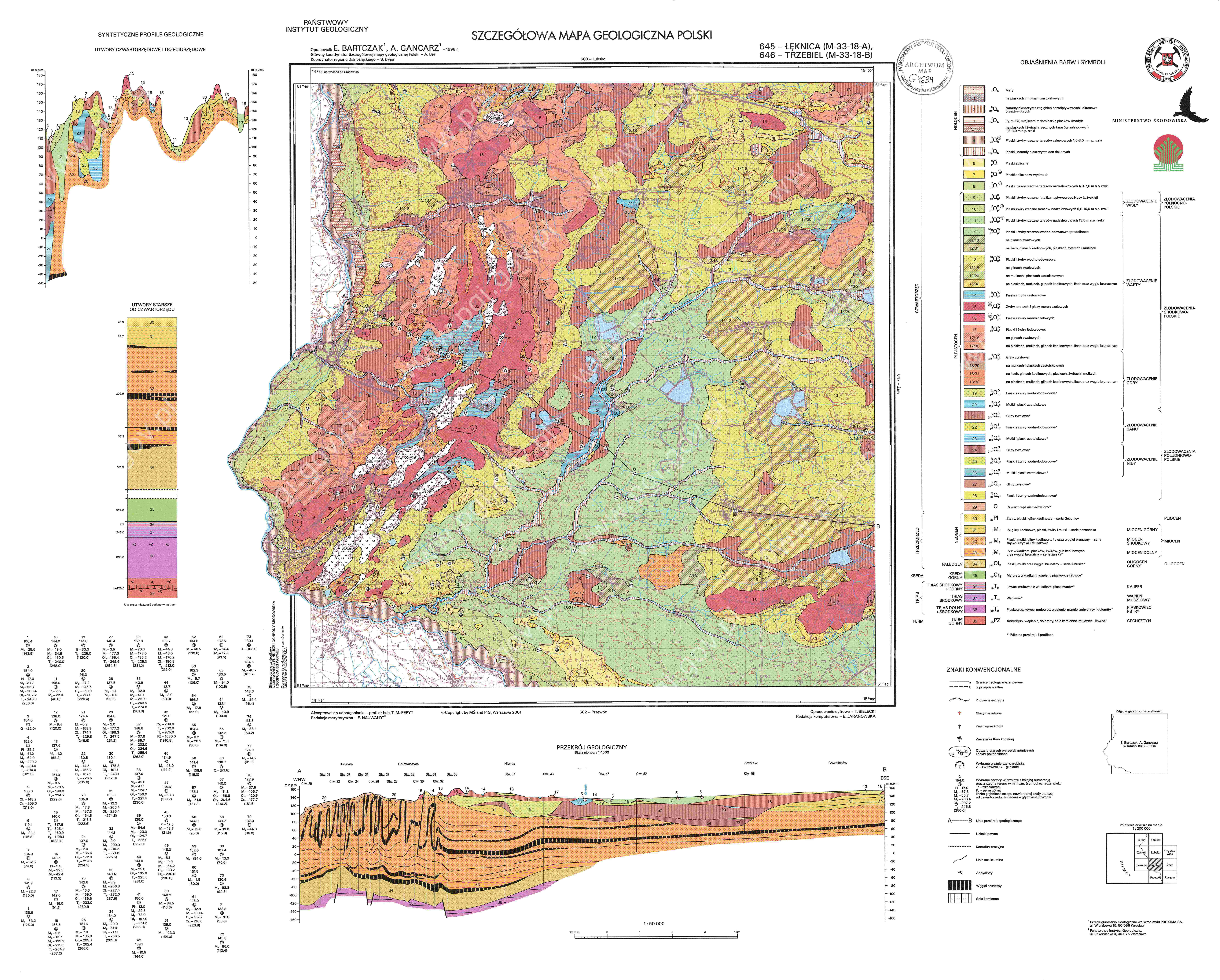
Bartczak E. & Gancarz A., 1998. Szczegółowa mapa geologiczna Polski 1:50 000. Arkusze 645 – Łęknica (M-33-18-A), 646 – Trzebiel (M-33-18-B). Państwowy Instytut Geologiczny (Polish Geological Institute), Warszawa. https://bazadata.pgi.gov.pl/data/smgp/arkusze_skany/smgp0646.jpg [access: 20.03.2025].
Bau M. & Dulski P., 1996. Distribution of yttrium and rare-earth elements in the Penge and Kuruman iron-formations, Transvaal Supergroup, South Africa. Precambrian Research, 79(1–2), 37–55. https://doi.org/10.1016/0301-9268(95)00087-9.
Bauerek A., Bebek M., Białecka B., Mitko K. & Thomas M., 2019. Contents of rare earth elements in acidic waters linked to mining of coal and lignite (Upper Silesia and Muskau Bend, Southern Poland). Rocznik Ochrona Środowiska – Annual Set The Environment Protection, 21, 1040–1060.
Blowes D.W., Ptacek C.J., Jambor J.L., Weisener C.G., Paktunc D., Gould W.D. & Johnson D.B., 2014. The geochemistry of acid mine drainage. [in:] Holland H.D. & Turekian K.K. (eds.), Treatise on Geochemistry (Second Edition). Volume 11: Environmental Geochemistry, Elsevier, Amsterdam, 131–190. https://doi.org/10.1016/B978-0-08-095975-7.00905-0.
Boehrer B. & Schultze M., 2006. On the relevance of meromixis in mine pit-lakes. [in:] Barnheisel R.I. (ed.), Proceedings of the 7th International Conference on Acid Rock Drainage (ICARD), St. Louis, USA, 26–30 March 2006, American Society of Mining and Reclamation, Lexingtion, 200–213. https://doi.org/10.21000/JASMR06020200.
Bozau E., Leblanc M., Luc Seidel J.L. & Stärk H.-J., 2004. Light rare earth elements enrichment in an acidic mine lake (Lusatia, Germany). Applied Geochemistry, 19(3), 261–271. https://doi.org/10.1016/S0883-2927(03)00150-1.
Broadhurst J., 2019. The contribution of mining to clean water and sanitation (SDG 6): Case studies from South Africa. [in:] Nagao M., Masinja J. & Alhassan A. (eds.), Sustainable Development in Africa, Spears Media Press, Denver, 213–226.
Brugam R.B. & Lusk M., 1986. Diatom evidence for neutralization in acid surface mine lakes. [in:] Smol J.P, Battarbee R.W., Davis R.B. & Meriläinen J. (eds.), Diatoms and Lake Acidity, Dr W. Junk Publishers, Dordrecht, 115–129.
Cánovas C.R., Basallote M.D., Macías F., Olías M., Pérez-López R. & Nieto J.M., 2022. Thallium in environmental compartments affected by acid mine drainage (AMD) from the Iberian Pyrite Belt (IPB): From rocks to the ocean. Earth-Science Reviews, 235, 104264. https://doi.org/10.1016/j.earscirev.2022.104264.
Cardwell A.S., Rodriguez P.H., Stubblefield W.A., DeForest D.K. & Adams W.J., 2023. Chronic toxicity of iron to aquatic organisms under variable pH, hardness, and dissolved organic carbon conditions. Environmental Toxicology and Chemistry, 42(6), 1371–1385. https://doi.org/10.1002/etc.5627.
Chen L., Ma T., Du Y. & Xiao C., 2017. Dissolved Rare Earth Elements of different waters in Qaidam Basin, northwestern China. Procedia Earth and Planetary Science, 17, 61–64. https://doi.org/10.1016/j.proeps.2016.12.031.
Chudy K., Worsa-Kozak M., Wójcik A., Wolkersdorfer C., Drzewicki W., Konsencjusz D. & Szyszka D., 2021. Chemical variations in mine water of abandoned pyrite mines exemplified by the Colorful Lakes in Wieściszowice, Sudetes Mountains, Poland. Journal of Hydrology: Regional Studies, 38, 100974. https://doi.org/10.1016/j.ejrh.2021.100974.
Costa M.R., Marszałek H., da Silva E.F., Mickiewicz A., Wąsik M. & Candeias C., 2021. Temporal fluctuations in water contamination from abandoned pyrite Wieściszowice mine (Western Sudetes, Poland). Environmental Geochemistry and Health, 43(8), 3115–3132. https://doi.org/10.1007/s10653-021-00809-1.

Dembiec T., 2010. Baza danych GIS Mapy hydrogeologicznej Polski 1:50 000. Pierwszy poziom wodonośny – jakość wód, arkusz 646 – Trzebiel (M-33-18-B). Państwowy Instytut Geologiczny (Polish Geological Institute, Warszawa. https://bazadata.pgi.gov.pl/data/hydro/mhp/ppw/wj/mapy/mhpppwwj0646jw.jpg [access: 15.11.2025].
España J.S., Pamo E.L., Pastor E.S. & Ercilla M.D., 2008. The acidic mine pit lakes of the Iberian Pyrite Belt: An approach to their physical limnology and hydrogeochemistry. Applied Geochemistry, 23(5), 1260–1287. https://doi.org/10.1016/j.apgeochem.2007.12.036.
Fernández M.R., Martín G., Corzo J., de la Linde A., García E., López M. & Sousa M., 2018. Design and testing of a new diatom-based index for heavy metal pollution. Archives of Environmental Contamination and Toxicology, 74(1), 170–192. https://doi.org/10.1007/s00244-017-0409-6.
Friese K., Hupfer M. & Schultze M., 1998. Chemical characteristics of water and sediment in acid mining lakes of the Lusatian Lignite District. [in:] Geller W., Klapper H. & Salomons W. (eds.), Acidic Mining Lakes: Acid Mine Drainage, Limnology and Reclamation, Springer, Berlin, Heidelberg, 25–45. https://doi.org/10.1007/978-3-642-71954-7_3.
Fuentes-López J.M., Olías M., León R., Basallote M.D., Macías F., Moreno-González R. & Cánovas C.R., 2022. Stream-pit lake interactions in an abandoned mining area affected by acid drainage (Iberian Pyrite Belt). Science of The Total Environment, 833, 155224. https://doi.org/10.1016/j.scitotenv.2022.155224.
Gammons C.H., Wood S.A., Pedrozo F., Varekamp J.C., Nelson B.J., Shope C.L. & Baffico G., 2005. Hydrogeochemistry and rare earth element behavior in a volcanically acidified watershed in Patagonia, Argentina. Chemical Geology, 222(3–4), 249–267. https://doi.org/10.1016/j.chemgeo.2005.06.002.
Gawor Ł.P. & Lutyńska S., 2015. Assessment of water quality of degraded anthropogenic reservoirs situated in the area of the former Rozbark Coal Mine in Bytom. Geology, Geophysics and Environment, 41(3), 249–256. http://dx.doi.org/10.7494/geol.2015.41.3.249.
Gąsiorowski M., Stienss J., Sienkiewicz E. & Sekudewicz I., 2021. Geochemical variability of surface sediment in post-mining lakes located in the Muskau Arch (Poland) and its relation to water chemistry. Water, Air, & Soil Pollution, 232(3), 108. https://doi.org/10.1007/s11270-021-05057-8.
Geller W., 2013. Case studies and regional surveys. [in:] Geller W., Schultze M., Kleinmann R. & Wolkersdorfer C. (eds.), Acidic Pit Lakes: The Legacy of Coal and Metal Surface Mines, Springer, Berlin, Heidelberg, 265–436. https://doi.org/10.1007/978-3-642-29384-9_3.
German C.R. & Elderfield H., 1989. Rare earth elements in Saanich Inlet, British Columbia, a seasonally anoxic basin. Geochimica et Cosmochimica Acta, 53(10), 2561–2571. https://doi.org/10.1016/0016-7037(89)90128-2.
Gontaszewska A., Kraiński A., Jachimko B. & Kołodziejczyk U., 2007. Budowa geologiczna i warunki hydrogeologiczne zbiornika antropogenicznego w okolicach Łęknicy (Łuk Mużakowa) [Geological structure and hydrogeological conditions of anthropogenic reservoir in the environs of Łęknica (Muskau Arc)]. Zeszyty Naukowe. Inżynieria Środowiska – Uniwersytet Zielonogórski, 134(14), 33–40.
Grawunder A. & Merten D., 2012. Rare earth elements in acidic systems – biotic and abiotic impacts. [in:] Kothe E. & Varma A. (eds.), Bio-Geo Interactions in Metal-Contaminated Soils, Soil Biology, 31, Springer, Berlin, Heidelberg, 81–97. https://doi.org/10.1007/978-3-642-23327-2_4.
Grawunder A., Merten D. & Büchel G., 2014. Origin of middle rare earth element enrichment in acid mine drainage-impacted areas. Environmental Science and Pollution Research, 21(11), 6812–6823. https://doi.org/10.1007/s11356-013-2107-x.
Gromet L.P., Dymek R.F., Haskin L.A. & Korotev R.L., 1984. The North American shale composite: Its compilation, major and trace element characteristics. Geochimica et Cosmochimica Acta, 48(12), 2469–2482. https://doi.org/10.1016/0016-7037(84)90298-9.
Haskin L.A., Wildeman T.R. & Haskin M.A., 1968. An accurate procedure for the determination of the rare earths by neutron activation. Journal of Radioanalytical Chemistry, 1(4), 337–348. https://doi.org/10.1007/BF02513689.
Hogsden K.L. & Harding J.S., 2012. Consequences of acid mine drainage for the structure and function of benthic stream communities: a review. Freshwater Science, 31(1), 108–120. https://doi.org/10.1899/11-091.1.
Jachimko B. & Kasprzak M., 2011. Zmiany składu chemicznego wód kopalnianego zbiornika zapadliskowego [Chemical composition of water in post-mining reservoir of impact origin]. Rocznik Ochrona Środowiska, 13, 1753–1766.
Jędrczak A., 1992. Skład chemiczny wód pojezierza antropogenicznego w Łuku Mużakowskim. Wydawnictwo Wyższej Szkoły Inżynierskiej w Zielonej Górze, Zielona Góra.
Jędrczak A., 1996. Zbiorniki acidotroficzne. Zeszyty Naukowe Politechniki Zielonogórskiej. Inżynieria Środowiska, 114(6), 49–77.
Koźma J., 2016. Anthropogenic landscape changes connected with the old brown coal mining based on the example of the polish part of the Muskau Arch area. Górnictwo Odkrywkowe, 57(3), 5–13.
Koźma J. & Migoń P., 2024. Mużaków rampart (Muskau Arch) – the legacy of glacial processes and mining in the UNESCO Global Geopark. [in:] Migoń P. & Jancewicz K. (eds.), Landscapes and Landforms of Poland, Springer, Cham, 483–497. https://doi.org/10.1007/978-3-031-45762-3_28.
Lee G., Bigham J.M. & Faure G., 2002. Removal of trace metals by coprecipitation with Fe, Al and Mn from natural waters contaminated with acid mine drainage in the Ducktown Mining District, Tennessee. Applied Geochemistry, 17(5), 569–581. https://doi.org/10.1016/S0883-2927(01)00125-1.
León R., Macías F., Cánovas C.R., Pérez-López R., Ayora C., Nieto J.M. & Olías M., 2021. Mine waters as a secondary source of rare earth elements worldwide: The case of the Iberian Pyrite Belt. Journal of Geochemical Exploration, 224, 106742. https://doi.org/10.1016/j.gexplo.2021.106742.
Li B., Chen Y. & Hu L., 2025. Characteristics of rare earth elements in groundwater of multiple aquifers and their implications in the Panxie mine area, Huainan Coalfield, China. Polish Journal of Environmental Studies. https://doi.org/10.15244/pjoes/203913.
López-González N., Borrego J., Carro B., Grande J.A., De la Torre M.L. & Valente T., 2012. Rare-earth-element fractionation patterns in estuarine sediments as a consequence of acid mine drainage: A case study in SW Spain. Boletín Geológico y Minero, 123(1), 55–64.
Lund M.A. & Blanchette M.L., 2023. Closing pit lakes as aquatic ecosystems: Risk, reality, and future uses. WIREs Water, 10(4), e1648. https://doi.org/10.1002/wat2.1648.
Luo Y., Rao J. & Jia Q., 2022. Heavy metal pollution and environmental risks in the water of Rongna River caused by natural AMD around Tiegelongnan copper deposit, Northern Tibet, China. PLoS ONE, 17(4), e0266700. https://doi.org/10.1371/journal.pone.0266700.
Lutyńska S. & Labus K., 2015. Identification of processes controlling chemical composition of pit lakes waters located in the eastern part of Muskau Arch (Polish-German borderland). Archives of Environmental Protection, 41(3), 60–69. https://doi.org/10.1515/aep-2015-0031.
Marszelewski W., Dembowska E.A., Napiórkowski P. & Stolarczyk A., 2017. Understanding abiotic and biotic conditions in post-mining pit lakes for efficient management: A case study (Poland). Mine Water and the Environment, 36(3), 418–428. https://doi.org/10.1007/s10230-017-0434-8.
Migaszewski Z.M. & Gałuszka A., 2015. The characteristics, occurrence, and geochemical behavior of rare earth elements in the environment: A review. Critical Reviews in Environmental Science and Technology, 45(5), 429–471. https://doi.org/10.1080/10643389.2013.866622.
Migaszewski Z.M., Gałuszka A. & Dołęgowska S., 2016. Rare earth and trace element signatures for assessing an impact of rock mining and processing on the environment: Wiśniówka case study, south-central Poland. Environmental Science and Pollution Research, 23(24), 24943–24959. https://doi.org/10.1007/s11356-016-7713-y.
Migaszewski Z.M., Gałuszka A. & Migaszewski A., 2014. The study of rare earth elements in farmer’s well waters of the Podwiśniówka acid mine drainage area (south-central Poland). Environmental Monitoring and Assessment, 186(3), 1609–1622. https://doi.org/10.1007/s10661-013-3478-7.
Mikoda B., Potysz A., Siepak M. & Kmiecik E., 2024. The valorization of flotation tailings in terms of the concept of the circular economy: Characterization, environmental risk assessment, and waste utilization routes. Geology, Geophysics and Environment, 50(4), 401–420. https://doi.org/10.7494/geol.2024.50.4.401.
Najbar B. & Jędrczak A., 1998. Stopień zeutrofizowania wód zbiorników „pojezierza antropogenicznego”. Zeszyty Naukowe Politechniki Zielonogórskiej. Inżynieria Środowiska, 116(7), 19–37.
Nordstrom D.K., 2011. Mine waters: Acidic to circmneutral. Elements, 7(6), 393–398. https://doi.org/10.2113/gselements.7.6.393.
Oksanen J., Simpson G., Blanchet F., Kindt R., Legendre P., Minchin P., O’Hara R., Solymos P., Stevens M., Szoecs E., Wagner H., Barbour M., Bedward M., Bolker B., Borcard D., Carvalho G., Chirico M., De Caceres M., Durand S., …, Weedon J., 2024. vegan: Community Ecology Package. R package version 2.6-6.1. https://CRAN.R-project.org/package=vegan [access: 12.06.2024].
Obregón-Castro C., Prudêncio M.I., Diamantino C., Carvalho E., Russo D. & Marques R., 2023. Geochemical behaviour of rare earth elements throughout an acid mine drainage passive treatment system in the Lousal mine area, Portugal. Mine Water and the Environment, 42(2), 533–545. https://doi.org/10.1007/s10230-023-00954-2.
Olías M., Cerón J.C., Fernández I. & De la Rosa J., 2005. Distribution of rare earth elements in an alluvial aquifer affected by acid mine drainage: The Guadiamar aquifer (SW Spain). Environmental Pollution, 135(1), 53–64. https://doi.org/10.1016/j.envpol.2004.10.014.
Onjia A., Huang X., Trujillo González J.M. & Egbueri J.C., 2022. Editorial: Chemometric approach to distribution, source apportionment, ecological and health risk of trace pollutants. Frontiers in Environmental Science, 10, 1107465. https://doi.org/10.3389/fenvs.2022.1107465.
Oszkinis-Golon M., Frankowski M., Jerzak L. & Pukacz A., 2020. Physicochemical differentiation of the Muskau Arch pit lakes in the light of long-term changes. Water, 12(9), 2368. https://doi.org/10.3390/w12092368.
Parshley J.V. & Bowell R.J., 2003. The limnology of summer Camp Pit lake: A case study. Mine Water and the Environment, 22(4), 170–186. https://doi.org/10.1007/s10230-003-0020-0.
Pukacz A., Oszkinis-Golon M. & Frankowski M., 2018. The physico-chemical diversity of pit lakes of the Muskau Arch (Western Poland) in the context of their evolution and genesis. Limnological Review, 18(3), 115–126. https://doi.org/10.2478/limre-2018-0013.
R Core Team, 2023. R: A Language and Environment for Statistical Computing. R Foundation for Statistical Computing, Vienna. https://www.R-project.org [access: 15.01.2024].
Rezaie B. & Anderson A., 2020. Sustainable resolutions for environmental threat of the acid mine drainage. Science of the Total Environment, 717, 137211. https://doi.org/10.1016/j.scitotenv.2020.137211.
Roccotiello E., Marescotti P., Di Piazza S., Cecchi G., Mariotti M.G. & Zotti M., 2015. Biodiversity in metal-contaminated sites – problem and perspective – a case study. [in:] Blanco J., Lo Y.-H. & Roy S. (eds.), Biodiversity in Ecosystems – Linking Structure and Function, IntechOpen, 563–582. https://doi.org/10.5772/59357.
Rozporządzenie, 2021. Rozporządzenie Ministra Infrastruktury z dnia 25 czerwca 2021 r. w sprawie klasyfikacji stanu ekologicznego, potencjału ekologicznego i stanu chemicznego oraz sposobu klasyfikacji stanu jednolitych części wód powierzchniowych, a także środowiskowych norm jakości dla substancji priorytetowych. Dz.U. 2021 poz. 1475 [Regulation of the Minister of Infrastructure of 25 June 2021 on the classification of ecological status, ecological potential, and chemical status, as well as the method of classification of the status of surface water bodies, and environmental quality standards for priority substances. Journal of Laws of 2021 item 1475]. https://isap.sejm.gov.pl/isap.nsf/DocDetails.xsp?id=WDU20210001475 [access: 3.03.2025].
Saha P. & Paul B., 2019. Assessment of heavy metal toxicity related with human health risk in the surface water of an industrialized area by a novel technique. Human and Ecological Risk Assessment: An International Journal, 25(4), 966–987. https://doi.org/10.1080/10807039.2018.1458595.
Schultze M., Boehrer B., Wendt-Potthoff K., Sánchez-España J. & Castendyk D., 2017. Meromictic pit lakes: Case studies from Spain, Germany and Canada and general aspects of management and modelling. [in:] Gulati R., Zadereev E. & Degermendzhi A. (eds.), Ecology of Meromictic Lakes, Ecological Studies, 228, Springer, Cham, 235–275. https://doi.org/10.1007/978-3-319-49143-1_9.
Sekudewicz I., Syczewski M., Rohovec J., Matoušková S., Kowalewska U., Blukis R., Geibert W., Stimac I. & Gąsiorowski M., 2024. Geochemical behavior of heavy metals and radionuclides in a pit lake affected by acid mine drainage (AMD) in the Muskau Arch (Poland). Science of The Total Environment, 908, 168245. https://doi.org/10.1016/j.scitotenv.2023.168245.
Shevenell L., Connors K.A. & Henry C.D., 1999. Controls on pit lake water quality at sixteen open-pit mines in Nevada. Applied Geochemistry, 14(5), 669–687. https://doi.org/10.1016/S0883-2927(98)00091-2.
Sienkiewicz E. & Gąsiorowski M., 2016. The evolution of a mining lake – from acidity to natural neutralization. Science of The Total Environment, 557–558, 343–354. https://doi.org/10.1016/j.scitotenv.2016.03.088.
Sienkiewicz E. & Gąsiorowski M., 2017. The diatom-inferred pH reconstructions for a naturally neutralized pit lake in south-west Poland using the mining and the combined pH training sets. Science of The Total Environment, 605–606, 75–87. https://doi.org/10.1016/j.scitotenv.2017.06.171.
Sienkiewicz E. & Gąsiorowski M., 2018. The influence of acid mine drainage on the phytoand zooplankton communities in a clay pit lake in the Łuk Mużakowa Geopark (western Poland). Fundamental and Applied Limnology, 191(2), 143–154. https://doi.org/10.1127/fal/2018/1079.
Sienkiewicz E. & Gąsiorowski M., 2019. Natural evolution of artificial lakes formed in lignite excavations based on diatom, geochemical and isotopic data. Journal of Paleolimnology, 62(1), 1–13. https://doi.org/10.1007/s10933-019-00069-1.
Sienkiewicz E., Gąsiorowski M., Sekudewicz I., Kowalewska U. & Matoušková Š., 2023. Responses of diatom composition and teratological forms to environmental pollution in a post-mining lake (SW Poland). Environmental Science and Pollution Research, 30(50), 110623–110638. https://doi.org/10.1007/s11356-023-30113-7.
Siepak M., Marciniak M., Sojka M. & Pietrewicz K., 2020. Trace elements in surface water and bottom sediments in the hyporheic zone of Lake Wadąg, Poland. Polish Journal of Environmental Studies, 29(3), 2327–2337. https://doi.org/10.15244/pjoes/109847.
Siepak M. & Sojka M., 2017. Application of multivariate statistical approach to identify trace elements sources in surface waters: a case study of Kowalskie and Stare Miasto reservoirs, Poland. Environmental Monitoring and Assessment, 189(8), 364. https://doi.org/10.1007/s10661-017-6089-x.
Simate G.S., 2021. Environmental and health effects of acid mine drainage. [in:] Simate G.S. & Ndlovu S. (eds.), Acid Mine Drainage: From Waste to Resources, CRC Press, Boca Raton, 97–116. https://doi.org/10.1201/9780429401985.
Simpson G.L. & Oksanen J., 2023. ggvegan: “ggplot2” Plots for the “vegan” Package. R package version 0.1.999. https://github.com/gavinsimpson/ggvegan.
Singovszka E., Balintova M., Demcak S. & Pavlikova P., 2017. Metal pollution indices of bottom sediment and surface water affected by acid mine drainage. Metals, 7(8), 284. https://doi.org/10.3390/met7080284.
Slavković-Beškoski L., Ignjatović L., Ćujić M., Vesković J., Trivunac K., Stojaković J., Perić-Grujić A. & Onjia A., 2024. Ecological and health risks attributed to rare earth elements in coal fly ash. Toxics, 12(1), 71. https://doi.org/10.3390/toxics12010071.
Sojka M., Siepak M. & Pietrewicz K., 2019. Concentration of rare earth elements in surface water and bottom sediments in Lake Wadąg, Poland. Journal of Elementology, 24(1), 125–140. https://doi.org/10.5601/jelem.2018.23.2.1648.
Szafarczyk A. & Gawałkiewicz R., 2023. An inventory of opencast mining excavations recultivated in the form of water reservoirs as an example of activities increasing the retention potential of the natural environment: A case study from Poland. Geology, Geophysics and Environment, 49(4), 401–418. https://doi.org/10.7494/geol.2023.49.4.401.
Śniady I., Orzechowska W., Smardz E. & Siepak M., 2024a. Trace elements in Turkusowe Lake waters and bottom sediments (Wolin National Park, Poland). Przegląd Geograficzny, 96(4), 459–471. https://doi.org/10.7163/PrzG.2024.4.3.
Śniady I., Zięba M., Wojciechowska J., Majewski M. & Siepak M., 2024b. Condition of the post-reclamation Przykona reservoir (Turek, Poland): Water and sediment chemistry. Acta Geographica Lodziensia, 114, 19–34. https://doi.org/10.26485/AGL/2024/114/2.
Takeno N., 2005. Atlas of Eh-pH Diagrams: Intercomparison of thermodynamic databases. Geological Survey of Japan Open File Report, 419. https://www.nrc.gov/docs/ML1808/ML18089A638.pdf.
Thomas R., Mantero J., Cánovas C.R., Holm E., García-Tenorio R., Forssell-Aronsson E. & Isaksson M., 2022. Natural radioactivity and element characterization in pit lakes in Northern Sweden. PLoS ONE, 17(3), e0266002. https://doi.org/10.1371/journal.pone.0266002.
US EPA, 2016. Provisional Peer-Reviewed Toxicity Values for Rubidium Compounds (CASRN 7440-17-7, Rubidium) (CASRN 7791-11-9, Rubidium Chloride) (CASRN 1310-82-3, Rubidium Hydroxide) (CASRN 7790-29-6, Rubidium Iodide). Superfund Health Risk Technical Support Center, Washington, DC, USA. https://hhpprtv.ornl.gov/issue_papers/Rubidium.pdf [access: 15.06.2025].
Vesković J., Bulatović S., Miletić A., Tadić T., Marković B., Nastasović A. & Onjia A., 2024. Source-specific probabilistic health risk assessment of potentially toxic elements in groundwater of a copper mining and smelter area. Stochastic Environmental Research and Risk Assessment, 38(4), 1597–1612. https://doi.org/10.1007/s00477-023-02643-6.
Yakovlev E., Druzhinina A., Druzhinin S., Zykov S. & Ivanchenko N., 2022. Assessment of physical and chemical properties, health risk of trace metals and quality indices of surface waters of the rivers and lakes of the Kola Peninsula (Murmansk Region, North-West Russia). Environmental Geochemistry and Health, 44(8), 2465–2494. https://doi.org/10.1007/s10653-021-01027-5.
Yu J., Liu X., Yang B., Li X., Wang P., Yuan B., Wang M., Liang T., Shi P., Li R., Cheng H. & Li F., 2024. Major influencing factors identification and probabilistic health risk assessment of soil potentially toxic elements pollution in coal and metal mines across China: A systematic review. Ecotoxicology and Environmental Safety, 274, 116231. https://doi.org/10.1016/j.ecoenv.2024.116231.
Zhuang W. & Song J., 2021. Thallium in aquatic environments and the factors controlling Tl behavior. Environmental Science and Pollution Research, 28(27), 35472–35487. https://doi.org/10.1007/s11356-021-14388-2.
Downloads
Published
Issue
Section
License

Authors have full copyright and property rights to their work. Their copyrights to store the work, duplicate it in printing (as well as in the form of a digital CD recording), to make it available in the digital form, on the Internet and putting into circulation multiplied copies of the work worldwide are unlimited.
The content of the journal is freely available according to the Creative Commons License Attribution 4.0 International (CC BY 4.0)