
Journals
-
Automatyka/Automatics
Automatyka/Automatics publishes original papers in an automatic control engineering field and related disciplines including: control theory and optimisation, dynamical system analysis and synthesis, control engineering applications, electrical engineering, computer science, information technology, electronics, and biomedical engineering. Discussion and review papers presenting current state of the art as well as new and emerging areas are also welkomed. The journal publishes letters to the editorial board, reviews, bibliographies and biographies of distinguished researchers in pertinent fields, historical materials, etc.
-
Computer Science
 The Computer Science Journal (ISSN: 1508-2806; e-ISSN: 2300-7036) is a quarterly (quaterly in organization, but published on a continuous basis) published by the AGH University of Krakow Poland since 1999.
We publish original papers concerning theoretical and applied computer science problems. The main areas of interest of the journal are theoretical aspects of computer science, soft computing, HPC, cloud and distributed processing and simulation, multimedia systems and computer graphics, and natural language processing.Please note: we don't have any article processing charges, our journal is non-profit. The journal is indexed by Web of Science and SCOPUS.
Starting in 2025 we publish on a continuous basis, speeding up the production process.
Please mind that the only possible way to submit the paper to our journal is to use the PDF generated using our Overleaf template! The papers must have BIBTEX-processed bibliography and vector-based graphics wherever possible. Other papers will be desk-rejected.
We accept use of AI/LLMS only for correction of the texts, the papers containing generated content will be rejected outright.
Web of Science Impact Factor = 0.3
Scopus Quartile = 3
-
Decision Making in Manufacturing and Services
 Decision Making in Manufacturing and Services (p-ISSN 1896-8325, e-ISSN 2300-7087) is an interdisciplinary, international, peer-reviewed and open access journal. DMMS annually publishes papers of interest to the entire decision-making community, including academic and industry researchers and decision makers working at the interface of research and implementation in manufacturing and services. DMMS's objective is to serve the entire decision-making community, including academic and industry researchers and decision makers working at the interface of research and implementation in manufacturing and services. The journal encourages a variety of methodological approaches to decision-making in manufacturing and services. The papers may be theoretical or empirical, analytical or computational, and may be based on a variety of disciplinary foundations such as management, economics, operations research, computer science, engineering, psychology, etc. The DMMS also publishes state-of-the-art reports by invited authors, critical reviews, and special issues devoted to particular topics.
The electronic version of the journal is the primary one.
There is no article processing charge (APC) for publication in the journal; it is entirely free of charge
Articles are published in English only.
All manuscripts sent for publication are checked to compare their similarity with other published works. For this purpose, we use: .
.
Articles are distributed according to the terms of the Creative Commons CC-BY 4.0 License. -
Energetyka Rozproszona
 ENERGETYKA ROZPROSZONA jest czasopismem polskojęzycznym, wydawanym w Akademii Górniczo-Hutniczej w Krakowie w ramach projektu „Rozwój energetyki rozproszonej w klastrach energii (KlastER)”. Podstawę stanowi wersja elektroniczna czasopisma zamieszczana na stronie internetowej Sieci Kompetencji ds. Energetyki Rozproszonej (https://www.energetyka-rozproszona.pl/czasopismo/) oraz na platformie OJS Wydawnictw AGH (https://journals.agh.edu.pl/er/) . Wybrane artykuły będą także publikowane w formie drukowanej w zeszytach wydawanych w cyklu półrocznym.
Czasopismo jest skierowane głównie do pracowników uczelni, doktorantów i studentów, inżynierów, polityków, działaczy samorządów terytorialnych i pracowników administracji państwowej, przedstawicieli wspólnot i lokalnych inicjatyw energetycznych, prosumentów oraz wszystkich osób zainteresowanych rozwojem energetyki rozproszonej w Polsce.
Czasopismo Energetyka Rozproszona publikuje różne rodzaje tekstów dotyczących technicznych, ekonomicznych, społecznych i legislacyjnych aspektów rozwijania lokalnych inicjatyw energetycznych.
-
Geology, Geophysics and Environment
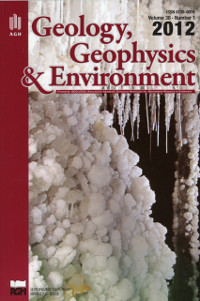 Geology, Geophysics and Environment (eISSN: 2353-0790; ISSN: 2299-8004) is an international, peer-reviewed open-access journal. There is no charge to authors for the article processing.
Geology, Geophysics and Environment publishes original papers, articles and notes from the Earth and Environmental Science field. The journal was previously published under the title of Geologia Kwartalnik AGH (AGH Geology Quarterly). The first issue of the journal was published in 1974. In 2012 the title was changed into Geology, Geophysics and Environment.
Web of Science's Journal Citation Reports
5-year Impact Factor: 0.9 (2022), 0.6 (2023), 0.6 (2024)
Impact Factor: 0.8 (2022), 0.4 (2023), 0.9 (2024) -
Geotourism/Geoturystyka
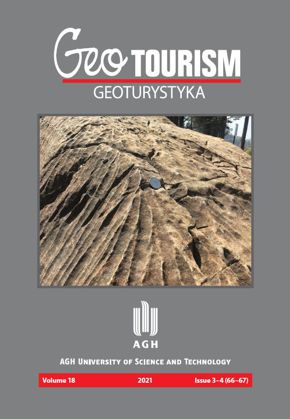
The journal has been published as GEOTURYSTYKA (Geotourism) since 2004, firstly in Polish with English summary. Since 2011 the journal is published as a GEOTOURISM (Geoturystyka) journal in English with wide Polish summary. This journal has been one of the first scientific title concerning geotourism/geopark topics in the Central Europe and authors were from several European countries and from other continents as well. GEOTOURISM has wide spectrum of publications both from primary geology, geomorphology, geography and active tourism with close connections with Earth sciences.
-
Journal of Casting & Materials Engineering
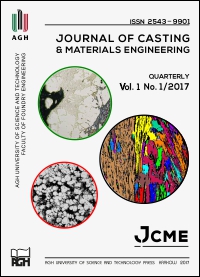 The JOURNAL OF CASTING & MATERIALS ENGINEERING (JCME) is a peer-reviewed, academic e-periodical devoted to issues in engineering processes and casting materials. The periodical is published as a quarterly in the open access system by the AGH University of Science and Technology in Kraków. The JCME publishes original research articles, as well as reviews and theoretical articles. The mission of the periodical is to contribute to the development of knowledge and new scientific ideas in the field of engineering processes and casting materials.
 -
Journal of Geotechnology and Energy (ISSN 2720-3581)
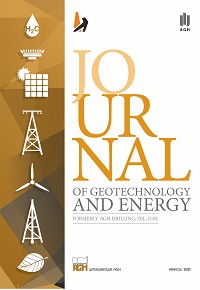 The Journal of Geotechnology and Energy is a quarterly published by the Faculty of Drilling, Oil and Gas at the AGH University of Krakow, Poland.
Journal is an interdisciplinary, international, peer-reviewed, and gold open access journal.
Journal of Geotechnology and Energy is a continuation of a nonperiodic series Zeszyty Naukowe AGH – Wiertnictwo Nafta Gaz started in 1985. In 2012, the quarterly Wiertnictwo Nafta Gaz was transferred into AGH Drilling, Oil, Gas and in 2021 into Journal of Geotechnology and Energy. As a result of this development, the thematic scope of accepted articles has been broadened.
We publish original articles concerning theoretical and applied research. Discussion and review papers presenting the current state of the art as well as new and emerging scientific ideas are also welcomed. Main areas of interest of the journal are: energy, geomechanics, geotechnics, drilling, reservoir engineering, geology, petroleum engineering, logging, management and protection of reservoirs, geothermal energy, groundwater, natural gas industry, hydrogen energy, CCS/CCSU, sustainable energy and environment.
Articles are published in English. Publication of scientific articles in Journal of Geotechnology and Energy is free of charge, while our journal is non-profit.
Journal of Geotechnology and Energy is owned by AGH University of Krakow and published by AGH University Press.
-
Managerial Economics
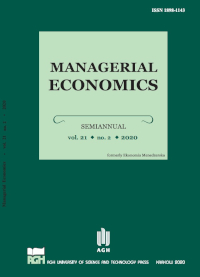 The main aim of Managerial Economics (ISSN 1898-1143, e-ISSN 2353-3617) is to draw more attention to major decision problems and to present the principles of economic analysis which is required for optimal decision-making (i.e. making the decisions which are most appropriate taking into account the conditions in which the company and the economy operate and the factors that are necessary for the implementation of a given economic project). Managerial economics examines and analyses the functioning mechanisms of modern market economies.
This is an open access journal which means that all content is freely available without charge to the user or his/her institution. Users are allowed to read, download, copy, distribute, print, search, or link to the full texts of the articles, or use them for any other lawful purpose, without asking prior permission from the publisher or the author. This is in accordance with the BOAI definition of open access.
©2024 Authors. Creative Commons CC-BY 4.0
-
Mechanics and Control
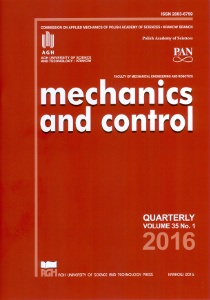 Mechanics and Control covers a wide range of theoretical and applied aspects of mechanics, mechanical engineering, vibration theory, machine dynamics, robotics, mechatronics, vibroacoustics, control of dynamical systems, active noise and vibration control methods, smart technologies, mechanics of materials, fluid mechanics, thermodynamics, operational reliability, problems of computer aided simulations and design and noise and vibration environment protection.
 -
Metallurgy and Foundry Engineering
 The Metallurgy and Foundry Engineering (ISSN: 1230-2325, e-ISSN: 2300-8377) journal will disseminate knowledge relating to the metallurgical and foundry engineering in general.
 -
Studia Humanistyczne AGH
The main goal of Studia Humanistyczne AGH. Społeczeństwo. Kultura. Technologia is to popularize the interdisciplinary perspective on the complex relations between modern technologies and society and culture. Since 2023, the journal has been published as a biannual publication and focuses on topics including:
- interrelations and influence between science and technology and society and culture; - the impact of innovation on contemporary societies and cultures (including their artifacts and practices)
- in the fields of urban studies, energy studies, and environmental and climate change research from the perspective of human experience and society;
- in the field of changes occurring in the media, media messages and communication under the influence of digitization and virtualization processes;
- related to contemporary inequalities in the context of technological change, including gender, disability, and old age studies.
Editor-in-Chief: Grzegorz Ptaszek
View Editorial Team -

Opuscula Mathematica
The journal Opuscula Mathematica publishes original research articles that are of significant importance in all areas of Discrete Mathematics, Functional Analysis, Operator Theory, Differential and Difference Equations, Harmonic Analysis, Nonlinear Analysis, and other areas of Applied Mathematics.
Publication frequency: 6 issues per year.
-
Geomatics and Environmental Engineering
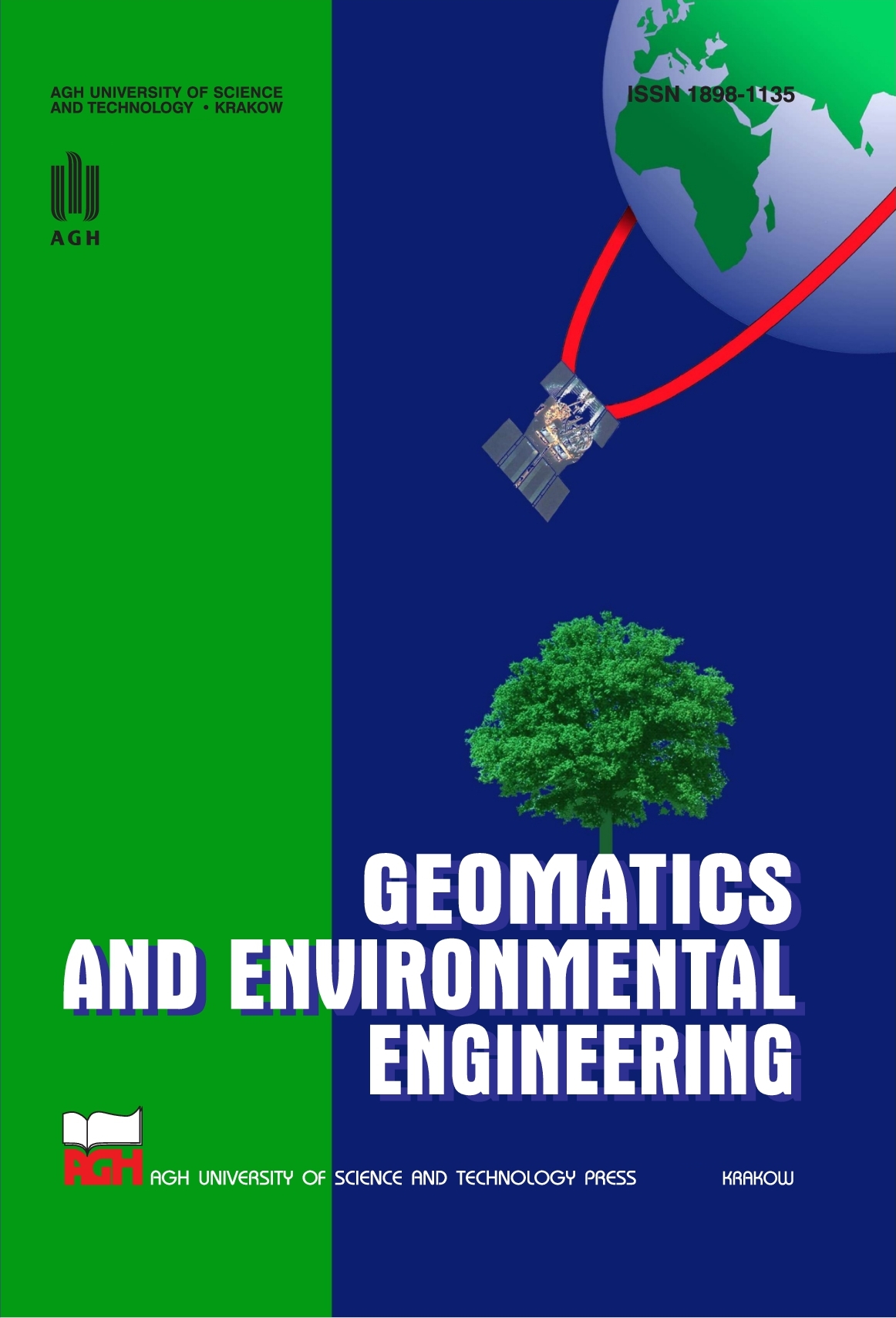 Geomatics and Environmental Engineering (ISSN Online: 2300-7095; ISSN Print: 1898-1135) is an interdisciplinary, international, peer-reviewed and open access journal. It provides an advanced forum for research related to the measurement and visualisation of human surrounding spatial phenomena and spatial objects, including geodesy and cartography in its broadest sense, as well as development and environmental protection problems using engineering and technical methods. It is published since 2007 year quarterly by the AGH University of Science and Technology Press (Kraków, Poland).